Addtime:
2021-05-26
Aluminum silicate fiber blanket, also known as ceramic fiber blanket, is a new type of lightweight refractory material with the advantages of light bulk density, high temperature resistance, good thermal stability, low thermal conductivity, small heat capacity, good mechanical vibration resistance, and small thermal expansion. So how high is the temperature resistance of aluminum silicate fiber blanket? The temperature of aluminum silicate fiber blanket is 1300-1350 degrees, and the use temperature of amorphous (glassy) fibers is lower than 1300 degrees. Most of these fibers are used in industrial kiln lining materials. The furnace temperature is lower than 1250 degrees. The glassy fibers will spontaneously crystallize and transform into stable crystals when heated. Due to the deterioration of fiber properties due to crystallization and grain growth, the use temperature of glass fibers is limited. The aluminum silicate fiber blanket of the thermal insulation forging furnace generally does not exceed 1300 degrees. On this basis, the crystalline fibers produced by the colloidal method are developed. The microstructure is polycrystalline, and the shrinkage is small during the long-term heating process above 1000 degrees, and the fiber structure can still be stable and excellent chemical corrosion resistance. Crystalline fibers can be divided into different types according to their chemical composition and main crystal phase.
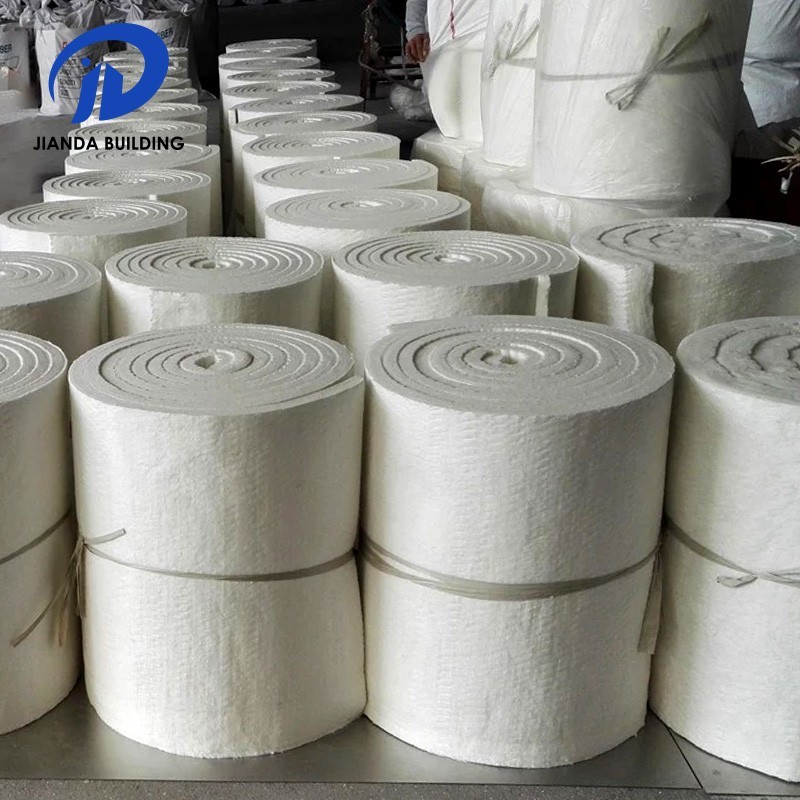
Aluminum silicate fiber blanket, also known as ceramic fiber blanket, is a new type of lightweight refractory material with the advantages of light bulk density, high temperature resistance, good thermal stability, low thermal conductivity, small heat capacity, good mechanical vibration resistance, and small thermal expansion. So how high is the temperature resistance of aluminum silicate fiber blanket? The temperature of aluminum silicate fiber blanket is 1300-1350 degrees, and the use temperature of amorphous (glassy) fibers is lower than 1300 degrees. Most of these fibers are used in industrial kiln lining materials. The furnace temperature is lower than 1250 degrees. The glassy fibers will spontaneously crystallize and transform into stable crystals when heated. Due to the deterioration of fiber properties due to crystallization and grain growth, the use temperature of glass fibers is limited. The aluminum silicate fiber blanket of the thermal insulation forging furnace generally does not exceed 1300 degrees. On this basis, the crystalline fibers produced by the colloidal method are developed. The microstructure is polycrystalline, and the shrinkage is small during the long-term heating process above 1000 degrees, and the fiber structure can still be stable and excellent chemical corrosion resistance. Crystalline fibers can be divided into different types according to their chemical composition and main crystal phase.
Extended information:
The important indicators of aluminum silicate fiber blanket are fiber diameter and thermal stability. Al2o3sio2 fiber is a commonly used fiber in the ceramic industry. According to the content of Al2o3, it can be divided into different application fields, and cr2o3 material is introduced to improve its fire resistance and oxidation resistance. Generally speaking, fiber products with high alumina content and low iron oxide content are pure white, and chromium oxide fiber is the color of milk yellow. The average diameter of aluminum silicate fiber blanket is 22-33 microns. Fiber is fine, low density, low thermal conductivity, and high use temperature. If the fiber is thick and dense, the application effect is not ideal. Fiber thermal stability indicators are more important. The linear shrinkage range of al2o3-sio2 fiber products at 1260 is between 35% and 88%. The amount of shrinkage also directly affects thermal stability.
Due to the low thermal conductivity, low density and light weight of aluminum silicate fiber blankets, the design and construction of kilns are all supported by lighter steel frames, making the development of ceramic kilns enter the era of "lightweight kilns". Fibers have less heat storage and are suitable for rapid heating and cooling firing. Fibers are flexible and can be processed into products with grooves or openings. They have good mechanical impact and impact resistance, and good chemical stability.

Contact: Mr. Wang
Cell phone: +86-13806486406/ +8615966977595/ +8613625336570
Phone: +86-533-6186770
E-mail: rachel@ceramicfiberboard.com
jianda@ceramicfiberboard.com
matt@ceramicfiberboard.com
Address: No. 5817, Zhengyang Road, Zhoucun District, Zibo City, Shandong Province